ServicesCommercial Roofing
Commercial Roofing in Lynwood for Shops, Offices and Small Buildings
We repair, recoat and replace roofs on storefronts, offices, warehouses and apartment buildings. Our roof inspection shows you what the membrane, drains and flashing are doing today, and whether a reflective roof could ease the load on your rooftop units through a long summer.
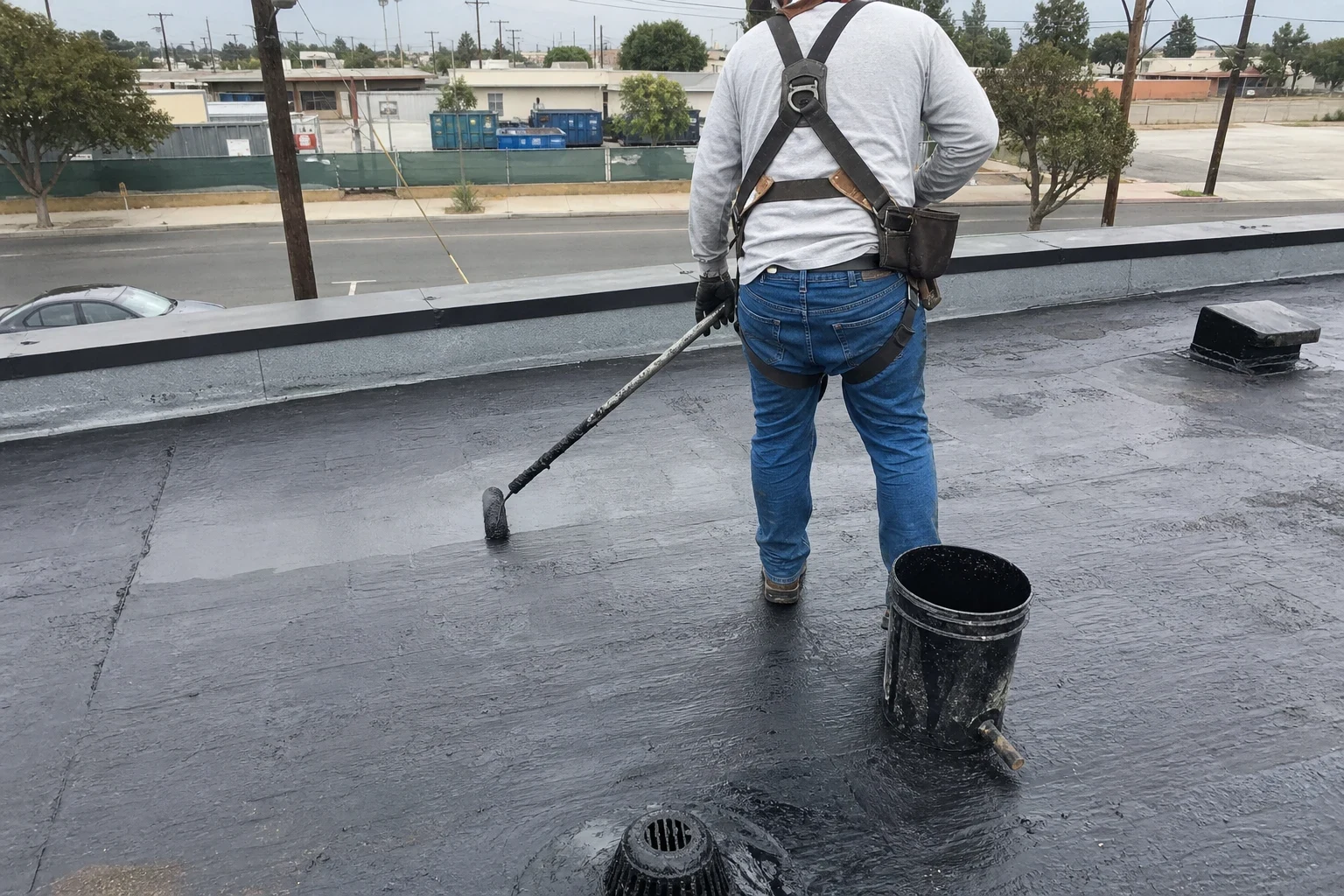
Roofing for the buildings that keep your business running
Most commercial roofs are low-slope: a membrane, built-up or modified bitumen surface over insulation, broken up by parapet walls, scuppers, vents and HVAC curbs. Those breaks are where water and heat usually get in, so that is where we start.
We are a licensed roofing contractor, CSLB 1092407 (C-39), and we carry insurance. Our owner has 40 years of roofing experience, which matters when an older building has several generations of patches on it and you need to know which ones still hold.
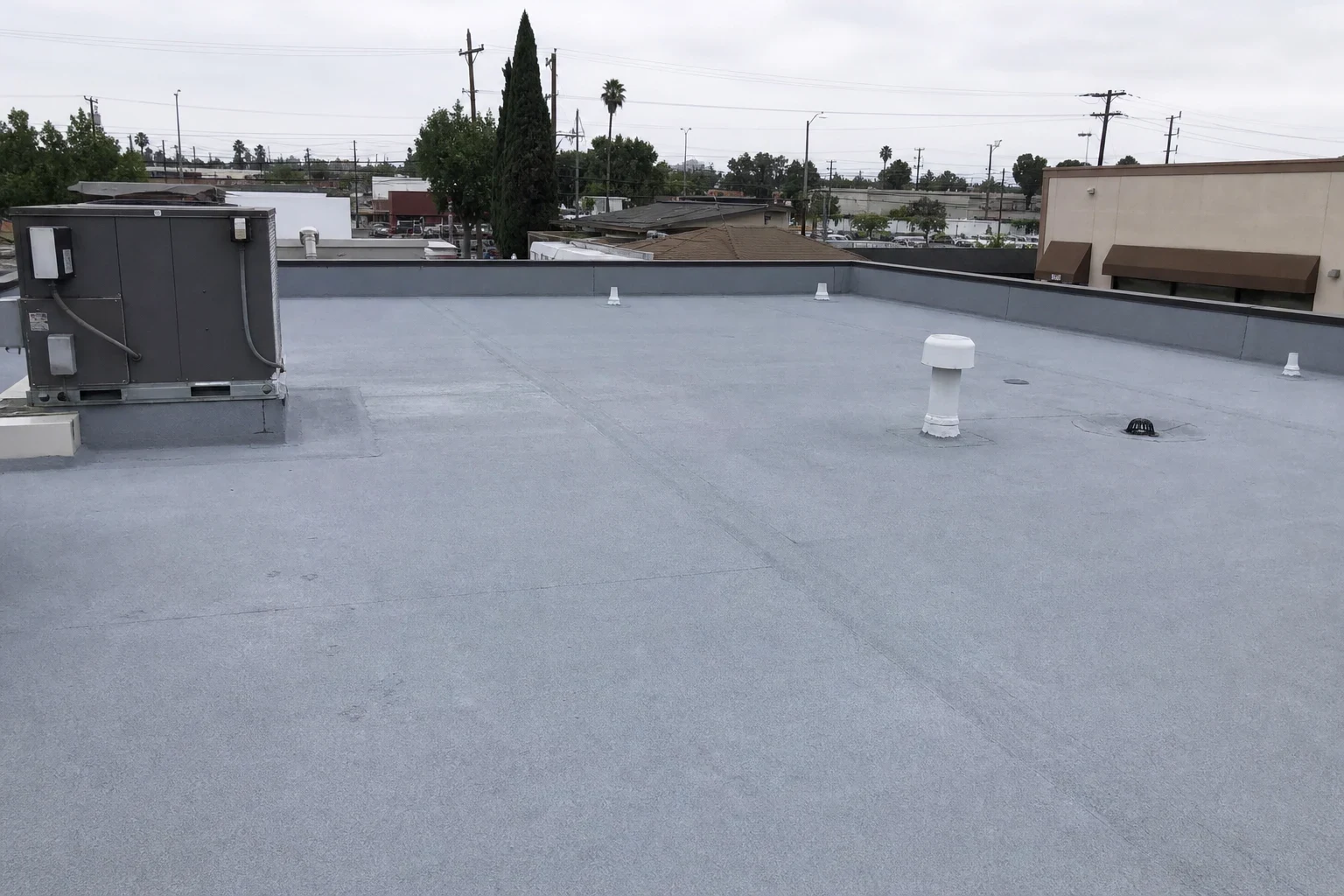
A dark, worn roof can get far hotter than the air on a summer afternoon, and your rooftop units pay for that heat. When a roof is due, a reflective membrane or coating can lower it. We will tell you plainly when the savings are real and when a simple repair is the better use of your money.
What our commercial roofing work covers
- Membrane repair and replacement
- We work on TPO, PVC, modified bitumen and built-up roofs. Seams are welded or sealed the way that material calls for, not smeared over with mastic.
- Reflective roof coatings
- On a membrane that is still sound, a coating can add years and bounce sunlight back off the roof. We check adhesion and moisture first, because coating over wet insulation only traps the problem.
- Drains, scuppers and gutters
- Water that sits on a flat roof finds every weak seam. We clear and reset drains, rework scuppers and tie in gutters and downspouts so water leaves the roof quickly.
- Flashing at curbs, walls and penetrations
- HVAC curbs, vent pipes, skylights and parapet caps get new flashing set into the membrane. Most commercial leaks trace back to one of these details.
- Insulation under the new roof
- On a full replacement we look at the insulation board too. Replacing wet board or adding thickness is often where the biggest change in summer cooling comes from.
Signs your building's roof needs attention
Water standing two days after rain
Ponding that lingers past 48 hours stresses seams and adds weight. It usually points to clogged drains, a sagging deck or a slope that was never right.
Stains on ceiling tiles
Drop-ceiling stains often show up well away from the actual leak, since water travels along the deck. A stain near a wall or a unit is worth a look before the rainy months.
Blisters, cracks or alligatoring
Bubbles in the membrane or a crazed, cracked surface mean the roof is drying out under the sun and losing its seal.
Cooling bills creeping up
If the bills climb while your HVAC service tech says the units are fine, a hot, dark roof or soaked insulation may be pulling heat into the building.
Loose seams and edge metal
Wind lifts seams and edge metal first. Once an edge peels back, water and wind get under the membrane and the damage spreads.
What drives the cost of a commercial roof
Commercial pricing comes down to square footage, what is under the surface and how much detail work the roof has. We price from what we actually find on your roof, line by line, so you can compare repair, coating and replacement side by side.
Roof size and access
Larger roofs spread out setup costs. A roof reached only through an interior hatch or a tight alley takes more labor to load and clear.
Wet insulation and deck condition
Saturated insulation has to come out before anything new goes on. Rusted metal deck or rotted wood sections add to the scope.
Membrane and insulation choice
TPO, PVC, modified bitumen and coatings each cost and perform differently. Thicker insulation raises the price up front and lowers cooling loads after.
Units, curbs and penetrations
Every HVAC curb, vent and skylight needs its own flashing, so a crowded roof costs more per square foot than an open one.
Energy code and permits
California's Title 24 energy code sets cool roof rules for many low-slope reroofs, and the permit and inspection are part of the job.
How a commercial roof job runs
- 1
Inspection on the roof
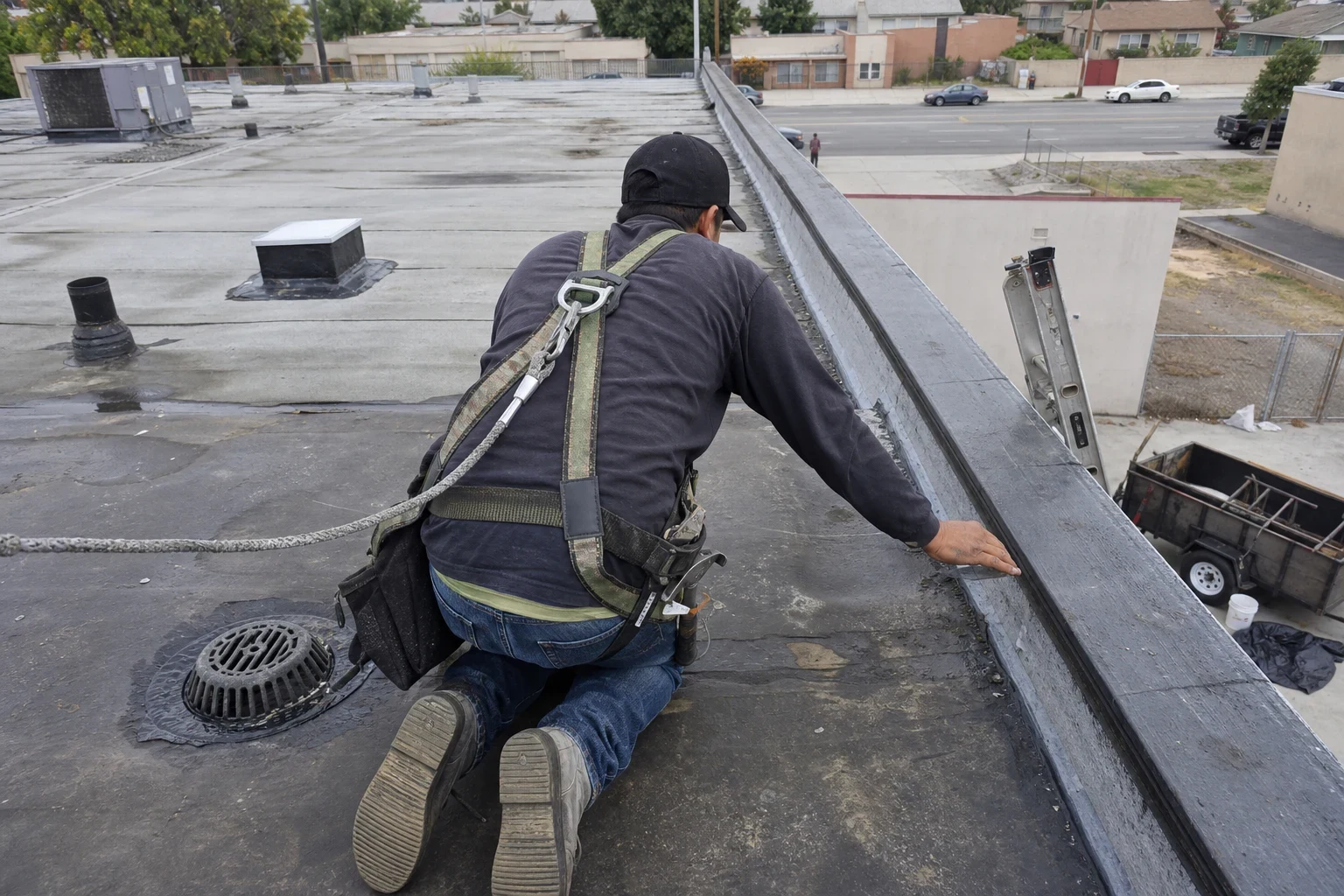
We walk the whole roof, check drains, seams, flashing and unit curbs, and take photos. If we suspect moisture, we test a small spot so we know what is underneath.
- 2
Written estimate and options
You get a written estimate with each line spelled out, comparing repair, coating or replacement by lifespan and heat. We work directly with your insurance claim if there is one, and financing is available through Service Finance Company, subject to credit approval.
- 3
Work planned around your hours
We schedule around your customers or tenants, keep entrances clear and protect the units on the roof. We pull the permit and handle the required inspection.
- 4
Cleanup and walk-through
Debris comes off the roof at the end of each day. When we finish, we walk the roof with you and go over the photos.
Commercial roofing questions
Do I need to close my business while you work?
Usually not. Most of the work happens up top, and we plan the noisy or smelly steps, like tear-off and adhesives, for slower hours when we can. We let you know before each work day what to expect at the entrances and parking.
Is a cool roof worth it on my building?
On a building with rooftop air conditioning and a long hot season, a reflective surface often trims cooling costs and keeps the top floor more comfortable. How much depends on your insulation and how the space is used. We give you an honest read at the inspection, not a sales number.
Can my existing roof be coated instead of replaced?
Sometimes. If the membrane is well attached, the insulation is dry and the seams are sound, a coating can be good value. If the roof is wet underneath, a coating just seals the moisture in, and we will tell you so.
Will you work with my property insurance?
Yes. We document damage with photos and work directly with your insurance claim. Your adjuster decides what is covered; our job is to show clearly what is happening on the roof.
Let's take a look at your building's roof
We will walk the roof, photograph what we find and explain your options before anything is scheduled. Owners and managers in Lynwood, South Gate, Downey and Paramount can start with a free inspection.